Mostrando entradas con la etiqueta British culture and history. Mostrar todas las entradas

domingo, 8 de abril de 2012

What the Dickens!*


In 2012 it will be celebrated the 200th brithday of Charles Dickens, after Shakespeare, the greatest writer in English of all times. He was born in Porstmouth, England, the 7 of February of 1812 and died the 8 of June of 1870 in his country house in Higham, Kent, England.

En 2012, se celebraran los 200 años del nacimiento de Charles Dickens. Después de Shakespeare el más grande escritor en Inglés de todos los tiempos. Nació en Porstmouth, Inglaterra, el 7 de febrero de 1812 y murió el 8 de junio de 1870 en su casa de campo en Higham, Kent, Inglaterra.

In what follows, as usual, you will find some interesting, and helpful, links to sites
to practice your English skills. A continuación, como de costumbre, os dejo unos cuantos enlaces para que podais practicar vuestro inglés. (*Por cierto, lo del título es una vieja exclamación. Ya no se usa. Pero pegaba tan bien...!)

This site was created for Teachers and Students of English as a Foreign Language around the world who
wish to meet Charles Dickens a little better. I believe that you can not learn English without studying the culture of English-speaking world. And the study of English and learn about Dickens will not only be educational, but above all, fun!
Este sitio ha sido creado para Profesores y Estudiantes de Inglés como Lengua Extranjera en todo el mundo, que desean conocer a Charles Dickens un poco mejor. Creo que no se puede aprender Inglés sin estudiar la cultura del mundo de habla Inglesa. Y el estudio del Inglés y aprender acerca de Dickens no sólo será educativo, sino, sobre todo, muy divertido!

These resources will investigate the key themes of the novels by Dickens, along with original source material from the British Library. Literary manuscripts, newspapers, letters, records and more fascinating elements to open the social, cultural and political context in which Dickens wrote.

Estos recursos permitirán investigar los temas clave de las novelas de Dickens, junto con material fuente original de la Biblioteca Británica. Manuscritos literarios, periódicos, cartas, registros de hospicio y muchos más elementos fascinantes recogidos ayudará a los estudiantes a abrir el contexto social, cultural y político en el que Dickens escribía.

These pages celebrate the bicentennial of the birth of Charles Dickens, one of the great writers of English. Below is a recording of the Dickens event, held in London in February. You can also follow the blog and try to free lesson plans!

Estas páginas celebran el bicentenario del nacimiento de Charles Dickens, uno de los grandes escritores en Inglés. A continuación se muestra una grabación del evento sobre Dickens en Londres en febrero y también se puede seguir su blog y descargar lecciones de inglés gratis!


martes, 20 de marzo de 2012

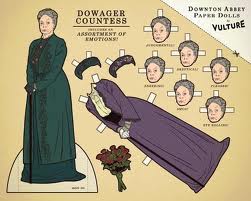
Downton Abbey


Lo confieso, ando colgado con esta serie. Me gusta todo: los personajes tan bien perfilados, esos escenarios reales tan bien elegidos, la fotografía con esa luz que ninguna serie española consigue ni siquiera imitar. Pero, sobre todo, me encanta el lenguaje que se usa. Esa variedad de acentos, de ese pomposo inglés de la clase alta hasta el acento del norte de los sirvientes.


I must confess I am totally hooked on this series. I like it all: the superbly defined characters, the really well-chosen scenary, the light, a light that no Spanish series even dreams of imitating. But above all I love the language used, the variety of accents, the pompous air of the upper class characters as well as the servants' Yorkshire English

Aparte de tratar con bastante rigor histórico el marco general de la serie, la primera guerra mundial, esta serie muestra las distinciones de clase de la epoca, si bien con cierto regustillo a culebrón. No obstante, se puede aprender mucho de la lengua y de la cultura británica.

Not only does this series deal, quite rigorously, with the background of WWI, but also with the social distinctions of the time, although with a certain soap-operish charm. However, there's a lot to be leant about British language and culture.

Aquí os dejo unos cuantos vínculos interesantes tanto para los que ya la veis como para los que quereis empezar a verla.

Here you have some links both for those of you already enjoying it and for those willing to start.

How much do you remember from the first episode of Downton Abbey's second series?
(Un juego de memoria acerca del primer episodio)

Downton Abbey: 8 Ways to Make It Awesome Again for Season Three
(Una serie de consejos para mejorar la tercera temporada)

Downton Abbey: which character are you?

(Un juego muy divertido que te dice quién serías tú en la serie)

The Accents in Downton Abbey
(Un blog muy interesante en el que trata de los diferentes acentos de la serie)

Highclere Castle is the home of the Earl and Countess of Carnarvon and also features as Downton Abbey (El castillo original donde se rodó la serie)

Downton Abbey and ‘the cult of the English country house’

(Un artículo sobre otras series británicas que transcurren en mansiones en la campiña inglesa)

Why I Feel Guilty Watching Downton Abbey, or That Creamy English Charm

(Un blog muy gracioso con un punto de vista diferente acerca de la serie)

lunes, 18 de octubre de 2010

The Savoy London

The Savoy

Long, long ago, in 1246, a few acres of land between the Strand and the Thames were presented by Henry III to Peter, Count of Savoy, the King’s wife's uncle. Peter built his Savoy Palace on the river, and the name has been connected to the place ever since. Nowadays, and after the recent reforms, its statue is back looking like a spooky golden Darth Vader.

Over 600 years later, Richard D’Oyly Carte chose the location for a new theatre, which he decided to call the Savoy Theatre, and the productions were known henceforth as the Savoy Operas. Later on The New Savoy on the river took five years to build and opened on August 6, 1889. It caused a sensation with its new technologies and facilities and set the trend ever since as far as luxury, service and grandeur are concerned in the hotel business.

The Savoy, the first luxury hotel in London, was also the first to use electricity. It had the first electric lifts, known as ‘ascending rooms’. Guest rooms were connected by speaking tube to the valet, maid and floor waiter – and to other parts of the hotel. The Savoy later became the first hotel to provide private bathrooms en suite. The ‘Savoy bathroom’ became famous for its cascading shower and quick filling bath. Something, by the way, which not many present-day hotels in London can be proud of.

In the early years, Savoy guests included Sarah Bernhardt and Dame Nellie Melba, for whom Auguste Escoffier, the James Martin of those days, famously created Melba Toast when she was on a diet. Here Geoffrey Chaucer began the Canterbury Tales, which means that the hotel's VIP guest book can be traced back a few centuries.

Painters such as James Whistler and Claude Monet both used views from The Savoy windows in their work. Oscar Wilde stayed with his friend Lord Alfred Douglas. The Prince of Wales himself and his circle were frequent visitors. Further VIP's such as Noel Coward, George Gershwin, George Bernard Shaw and H G Wells frequented the restaurants and, of course, the American Bar.

Art deco, jazz and The Savoy were made for each other. The new style was introduced, and the iconic stainless-steel sign over Savoy Court put up in 1929.

The stars loved The Savoy. England’s own Vivien Leigh was first introduced to her husband-to-be Laurence Olivier in the hotel’s Front Hall. From America came Hollywood icons such as Errol Flynn and Katharine Hepburn and from France, Josephine Baker and Coco Chanel. Winston Churchill regularly had lunch with his cabinet at the hotel during World War II.

From the beginning, the reign of Elizabeth II saw a new generation of actors, film stars and politicians at The Savoy. Among the most glamorous: Elizabeth Taylor, Sophia Loren and Marilyn Monroe. The Savoy rocked into the 1960s with guests ranging from Louis Armstrong, Marlon Brando and Jane Fonda to The Beatles and Bob Dylan.

Quite a few refurbishments were undertaken as the century came to a close, the last completed just in time for the great Savoy party that celebrated the new Millennium. In December 2007 began the most extensive of restorations that would re-launch The Savoy in 2010 with all the flair and opulence of old. What has been achieved is a quite remarkable synthesis of past and present. The Edwardian style of the original buildings and the art deco of the 1920s and 30s have been enhanced to embrace the very latest technology.


Ver mapa más grande


El Savoy de Londres

Allá por 1246, un tramo de tierra entre el Strand y el Támesis fue regalado por Enrique III a Pedro, conde de Saboya, el tío de la esposa y consorte del Rey. Pedro construyó su Palacio de Saboya en el río, y el nombre se ha asociado al lugar desde entonces. De hecho, tras la reciente reforma, su estatua preside el hotel con la forma, inquietante, de un Darth Vader dorado.

Más de 600 años después, el empresario Richard D'Oyly Carte eligió la ubicación para un nuevo teatro para operetas llamando a su nuevo edificio Teatro Savoy, y las producciones fueron conocidas desde entonces como las óperas Savoy. El nuevo Hotel Savoy tardó cinco años en construirse y abrió el 6 de agosto de 1889. Causó sensación por sus comodidades y tecnologías y desde entonces marcó tendencia en lo que se refiere a suntuosidad, servicio y lujo en la hostelería.

El primer hotel de lujo en Londres, fue también el primero en ser iluminado por electricidad. Tuvo los primeros ascensores eléctricos, conocidos como " habitaciones
ascendentes". Las habitaciones estaban conectadas por medio de un tubo para contactar con el ayuda de cámara, el servicio de limpieza y el servicio de habitaciones. El Savoy más tarde se convirtió en el primer hotel que proporcionaba baño privado en la mayor parte de sus habitaciones. El 'Baño Saboya" se hizo famoso por su ducha en cascada y un llenado rápido. Algo de lo que no todos los hoteles del centro de Londres de hoy día pueden presumir.

Durante los primeros años, se alojaron celebridades como Sarah Bernhardt y Nellie Melba, para quien el famoso Auguste Escoffier, el Ferrán Adriá de la época, creó la tostada Melba para cuando estaba a dieta. Mucho antes comenzó a escribir Geoffrey Chaucer sus "Cuentos de Canterbury" en lo que más tarde sería el hotel, así que su libro de visitas ilustres se remonta varios siglos atrás.

Artistas como Whistler y Monet se inspiraron desde las ventanas del Savoy en su trabajo. Oscar Wilde se alojó con su "amigo" Lord Alfred Douglas. El Príncipe de Gales y su círculo eran visitantes frecuentes. Otros huéspedes famosos fueron Noel Coward, George Gershwin, George Bernard Shaw y HG Wells, que frecuentaban los restaurantes y, cómo no, el bar americano.

El Art deco, el jazz y el Savoy se fusionaron en uno. El nuevo estilo caló hondo, y el signo icónico de acero inoxidable del Savoy fué erigido en 1929.

Las estrellas de cine adoraban el Savoy. Vivien Leigh fue presentada a su futuro esposo Laurence Olivier en el Salón central del hotel. De América vinieron los grandes de Hollywood como Errol Flynn y Katharine Hepburn y de Francia, Josephine Baker y Coco Chanel. Winston Churchill almorzaba frecuentemente con su gabinete en el hotel durante la Segunda Guerra Mundial.

Desde su principio, el reinado de Isabel II vio una nueva generación de actores, estrellas de cine y políticos en el Savoy. Entre las más glamurosas: Elizabeth Taylor, Sofía Loren y Marilyn Monroe. El Savoy abrió la década de 1960 con invitados que van desde Louis Armstrong, Marlon Brando y Jane Fonda a The Beatles y Bob Dylan.

Una serie de reformas se llevaron a cabo en el siglo XX, la penúltima hasta ahora fue completado justo a tiempo para celebrar el nuevo milenio. En diciembre de 2007 comenzó la más extensa de las restauraciones que relanzaría el Savoy en el 2010 con todo el encanto y la opulencia de antaño. Lo que se ha logrado es una mezcla de pasado y presente. El estilo eduardiano de los edificios originales y el art decó de la década de 1920 y 30 años se han mejorado hasta adaptarse a la tecnología más avanzada.


http://www.the-savoy.com/
(La página del hotel)
http://londonhotelsinsight.com/2010/08/18/the-new-savoy-luxurious-yes-but-eco-friendly-too-wed-18th-august/
(Curiosidades)
http://www.audioenglish.net/english-learning/efl_hotel.htm
(para practicar listening de reservas de hoteles)
http://www.eslflow.com/tourismlessons.html
(montones de ejercicios de Inglés para Turismo)
http://www.bbc.co.uk/worldservice/learningenglish/multimedia/london/unit2/read2.shtml
(otros ejercicios para practicar)


viernes, 14 de mayo de 2010

El Inglés de la Reina


Los británicos acaban de estrenar gobierno tan sólo cinco días después de las elecciones. El conservador Cameron, con la ayuda del liberal-demócrata Clegg, ha formado un gobierno de coalición tras ir a la reina a obtener el permiso pertinente.
Esto me recuerda un par de estupendas escenas de la película The Queen,
de Stephen Frears y con una esplendida Helen Mirren.

Es curioso que la reina, (que no gobierna, pero reina) tenga tanto poder aparente. Tanto es así que hasta tiene su própio inglés. El Inglés de la Reina, llamado también RP (Received Pronunciation) se considera el acento standar y de mayor prestigio social en Inglaterra y Gales. Se trata de un acento en cuanto a su pronunciación y registro (ya que denota la posición social y la educación recibida) y no un dialecto de la lengua (que implicaría unos usos gramaticales, semánticos y fonológicos diferentes).

Si quereis ver algunos detalles interesantes sobre este tema visitad esta página
http://www.ic.arizona.edu/~lsp/QueensEnglish.html
Si quereis practicar ese inglés serio, académico y formal, ésta: http://elc.polyu.edu.hk/cill/eap/.
Y esta otra (muy, muy completa) para practicar distintos registros del inglés, las diferentes destrezas y estilos: http://www.monash.edu.au/lls/llonline/writing/general/academic/3.1.xml

Just five days after the elections the British have a brand new government. The conservative leader Mr Cameron, with the support of Mr Clegg's Liberal- Democrats party, has now a coalition government after obtaining the Queen's consent. This reminds me of a couple of superb scenes in Stephen Frears' film The Queen, with a splendid Helen Mirren.

Interestingly enough, the Queen (Who doesn't govern but rules) holds so much (seeming) power that she even has her own English. Received Pronunciation (RP), also called the Queen's English, is the accent of Standard English in England,with a relationship to regional accents similar to that of other European languages. Although there is nothing intrinsic about RP that marks it as superior to any other variety, sociolinguistic factors give Received Pronunciation particular prestige in England and Wales. RP is an accent (a form of pronunciation) and a register, rather than a dialect (a form of vocabulary and grammar as well as pronunciation). It may show a great deal about the social and educational background of a person who uses English.

If you want some more interesting historic background on this topic, visit:
http://www.ic.arizona.edu/~lsp/QueensEnglish.html

For exercises in academic, formal English, this one: http://elc.polyu.edu.hk/cill/eap/

Finally, this is a very comprehensive web to practice different skills, levels of register, etc:
http://www.monash.edu.au/lls/llonline/writing/general/academic/3.1.xml


jueves, 15 de abril de 2010


Keep calm and carry on.

This line does not exactly come from one of my addresses to students before exam term, although I’m sure it’d do the job!

Those of you who have been travelling up and down Britain recently may have come across this line on all sorts of merchandise: t-shirts, mugs, posters, and all types of memorabilia. However, it is not exactly new. The poster was initially produced by the Ministry of Information in 1939 during the beginning of World War II, and was intended to be used only if the Nazis succeeded in invading Britain, in order to strengthen morale.

Two-and-a-half million copies were printed, although the poster was distributed only in limited numbers.
In 2000, a copy of the "Keep Calm and Carry On" poster was rediscovered in a second-hand bookshop and since Crown Copyright expires on artistic works created by the UK government after 50 years, the image is now in the public domain. Parodies of the poster, with similar type but changing the phrase or the logo (for example, an upside-down crown with "Now Panic and Freak Out"), have also been sold.

Right, now, let’s get to the point. If your exams are coming soon and you want to revise or practise with something different, let me recommend you this web page if you need listening exercises: http://www.eslcafe.com/search/index.html and remember, keep calm and carry on!


Keep calm and carry on. Tranquilizaos y seguid trabajando.

No, no estoy en mitad de una clase arengando a mis estudiantes ante la ya próxima e inexorable llegada de los exámenes. Aunque la verdad es que la frasecita viene al pelo.
Los que hayáis estado viajando por el Reino Unido recientemente seguro que habréis observado una cantidad de merchandising de todo tipo de la frase que encabeza este texto con una corona sobre ellas: tazas, camisetas, posters, etc.


Los hemos visto en todos los colores, y aunque a simple vista son bastante pop, tienen más de medio siglo de historia porque de hecho, el póster original soporte de la frase se confeccionó en 1939. Los encargó el Ministerio de Información del Reino Unido al inicio de la II Guerra Mundial y su propósito era usarlos en el caso de que los nazis consiguieran invadir el Reino Unido, con el objetivo de animar a los ingleses a resistir la guerra. De hecho se imprimieron dos millones y medio de copias aunque sólo se llegaron a exponer unas pocas.
En el año 2000 se encontró uno de aquellos posters en una librería, y como el copyright expiró a los 50 años de su creación, hoy en día este es uno de los diseños más reproducidos y también versionados, como en las que se puede leer “Keep calm and snap on” (tranquilízate y sigue haciendo fotografías) o una más divertida, con la corona dada la vuelta en la que se puede leer “Now panic and freak out” (que cunda el pánico y asústate).

Bueno, a lo que íbamos, si de verdad estáis de exámenes y queréis practicar, repasar o prepararos con algo diferente os recomiendo especialmente http://www.eslcafe.com/search/index.html si necesitáis ejercicios de listening. Y ya sabéis, ¡tranquilizaos y seguid trabajando!