VERY BRITISH MEALS
The first meal of the day in the morning is breakfast (usually eaten between about 7:30 and 9:00). Many British people eat toast with butter or margarine and jam (often strawberry, raspberry, apricot or blackcurrant jam), marmalade (a type of jam made from oranges) or Marmite (a dark brown spread made from yeast). Melon, grapefruit or fruit cocktail are popular. Others eat a bowl of cereal; for example, cornflakes or muesli with milk, or porridge (a mixture of oats, hot milk and sugar).
A traditional English breakfast (also known as a cooked breakfast or a fry-up) is a cooked meal which may contain food such as sausages, bacon, kippers (herring - a type of fish - which has been covered in salt and smoked), black pudding, scrambled or fried or poached egg, mushrooms, fried 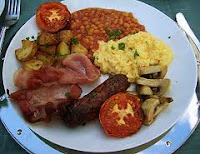 tomatoes, baked beans, hash browns and toast. People sometimes eat a boiled egg, dipping (dunking) strips of toast (soldiers) into the egg yolk. A continental breakfast is a small meal and is not cooked; for example, a bread roll or croissant with cheese or ham and a cup of coffee. The most common drinks at this time of day are orange juice or a cup of breakfast tea.
Many people have a tea-break at about 11:00 in the morning (elevenses). If a meal is eaten in the late morning instead of both breakfast and lunch, it is called brunch.
Lunch (sometimes called more formally luncheon) is the meal eaten in the middle of the day (usually between about 12:30 and 2:00). Many people eat a sandwich (also known as a butty or sarnie in some parts of the UK). Some people have a simple meal such as cheese and biscuits or soup and bread. A ploughman's lunch is a traditional lunch for farmers: a bread roll, Cheddar cheese, Branston pickle and salad, perhaps  with a pork pie. It is also traditional for people to go to a pub with some friends for a pub lunch and a drink.
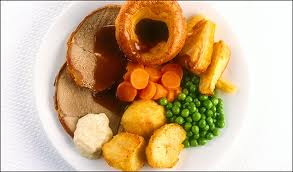
A Sunday roast is a traditional meal eaten by a family at Sunday lunchtime; for example, roast beef with roast potatoes, parsnips, peas, Brussels sprouts, green beans, Yorkshire pudding, bread sauce and gravy. Mint sauce or redcurrant jelly is often eaten with lamb, apple sauce with pork, and horseradish sauce (a type of mustard) with beef, cranberry sauce with turkey. Stuffing may be eaten with chicken or turkey.
Tea-time is a small meal eaten in the late afternoon (usually between about 3:30 and 5:00). People may drink tea, and often eat biscuits (American English: cookies), cakes or savoury foods such as sandwiches, crumpets or tea-cakes. Occasionally people may have a full 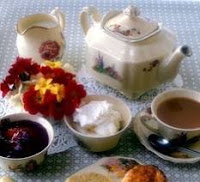 afternoon tea or a cream tea: this includes a scone with jam and cream (usually either whipped cream or thick clotted cream) as well as a selection of sandwiches and cakes.
High tea is a light meal eaten in the early evening (for example, 6 o'clock) served with a pot of tea; this is popular in north England and Scotland. Supper is the most common name for the meal eaten in the evening (usually between 7:00 and 8:30). Dinner is another common name for supper, but sometimes it is also used to refer to lunch, especially when this is the main meal of the day.
A dinner party is a formal evening meal to which guests have been invited. A common type of cooked meal in Britain is meat and two veg. This is a meat dish served together on the same plate with two types of vegetable, one of which is often a type of potato. It is common to eat a dessert (also known as a pudding, or informally as afters) after the main dish.
COMIDAS MUY BRITISH
La primera comida del día, por la mañana, es el desayuno (por lo general se toma entre las 7:30 y 9:00). Muchos británicos toman tostadas con mantequilla o margarina y mermelada (a menudo fresa, frambuesa, albaricoque o de grosellas negras), mermelada amarga (de naranjas) o Marmite (una oscura plasta marrón hecha de levadura). El cóctel de melón, na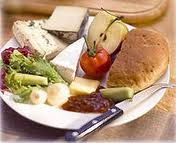 ranja o frutas es muy popular. Otros toman un plato de cereal, por ejemplo, cereales o muesli con leche o gachas (una mezcla de avena, leche caliente y azúcar). Un desayuno tradicional Inglés (también conocido como un desayuno caliente) es una comida cocinada que puede incluir alimentos tales como salchichas, tocino, arenques ahumados, pudín negro, huevos fritos, revueltos o escalfados, champiñones, tomates fritos, habichuelas, patatas y pan tostado. A veces la gente toma un huevo cocido, y tiras de pan tostado para en la yema de huevo. Un desayuno continental es una comida pequeña y no caliente, por ejemplo, un bollo de pan o croissant con queso o jamón y una taza de café. Las bebidas más comunes en esta hora del día son el zumo de naranja o una taza de té de desayuno.
Muchas personas tienen un té-break a las 11:00 de la mañana. Si una comida se toma al final de la mañana en vez de desayuno y el almuerzo, se llama brunch.
El almuerzo es la comida se come a la mitad del día (generalmente entre las 12:30 y 02:00). Muchas personas toman un sándwich. Algunas personas toman una comida sencilla, como el queso y galletas o sopa y pan. Un almuerzo de "labrador" es una comida tradicional de los agricultores: un bollo de pan, queso Cheddar, Branston pickle y ensalada, tal vez con un pastel de cerdo. También es tradicional que la gente vaya a un bar con unos amigos para una comida de pub y una bebida.

El asado de los domingos es una comida tradicional familiar a la hora del almuerzo dominical, por ejemplo, carne asada con patatas asadas, nabos, guisantes, coles de Bruselas, judías v erdes, el pudín de Yorkshire, salsa de pan y salsa. Salsa de menta o gelatina de grosella se come a menudo co n el cordero, salsa de manzana con carne de cerdo y salsa de rábano picante (un tipo de mostaza) con salsa de arándanos carne de res, de pavo. El relleno se puede comer con pollo o pavo.La hora del té es una pequeña comida para la tarde (por lo general entre las 3:30 y 5:00). La gente puede beber té y comer galletas, alimentos salados o dulces, como bocadillos, bollos o pasteles de té-. En ocasiones la gente disfruta una tarde de té completo: esto incluye un panecillo con mermelada y crema (por lo general ya sea de crema batida o crema de leche espesa), así como una selección de sándwiches y pasteles.La merienda es una comida ligera comida en la tarde (por ejemplo, a las 6) se sirve con una taz a de té, lo que es popular en el norte de Inglaterra y Escocia. Cena es el nombre más común para la comida de la noche (generalmente 7:00-08:30) pero a veces también se utiliza para referirse a la comida, sobre todo cuando es la comida principal del día. Un tipo común de comida cocinada en Gran Bretaña es de carne y verduras. Este es un plato de carne servido en el mismo plato con dos tipos de verdura, una de las cuales es a menudo un tipo de patata. Es común comer un postre (también conocido como un flan, o informalmente como afters) después del plato principal.