miércoles, 22 de junio de 2011

Fun under the Sun


So, the summer's here again and for those of you who want to keep on practising English even after the classes are all over, I give you here some advice on how not to forget everything you learnt this year...and with a little bit of fun!

Bueno, ahora que llega otra vez el verano, y para todos los que quereis seguir practicando inglès ahora que las clases han acabado, os traigo algo para no olvidar todo lo aprendido este curso, y divirtiendose.

http://www.funtrivia.com/ is a huge site full of trivia quizzes, as they put it: "To say that we have a lot of trivia would be an understatement. FunTrivia has over 1,000,000 trivia questions in 10,000 categories, created by over 30,000 different visitors to this site, from over 100 countries around the world. Over 1.6 million registered members and 6,000,000 guests have played a quiz. If you're looking for trivia or quizzes, you've come to the right place!"

www.funtrivia.com es una web llena de juegos de preguntas, como dicen ellos mismos: " Decir que tenemos muchos juegos es no decir nada. Tenemos mas de 1,000,000 preguntas en 10,000 categorias, creadas por cerca de 30,000 visitantes distintos de mas de 100 paises de todo el mundo. Mas de 1,6 millones de miembros registrados y 6,000,000 invitados han juado al menos una vez. Si buscas una web de juegos de preguntas, este es tu sitio"

Membership to FunTrivia is free, and as a member you may play and create as many games as you wish in any of the categories. As you play more, reveiving quizzes everyday in your e-mail, you get points and advance in the ranks and become part of the community.

Es gratis ser miembro y se pueden crear juegos en las diferentes categorias. Cuanto mas se juega, dandote de alta, recibiendo los juegos en tu cuenta de correo electrónico y contestando, se consiguen puntos y se abanza en el escalafón y pasar a formar parte de la comunidad.

viernes, 1 de abril de 2011

William & Kate

Para los que siguen apasionadamente las historias de amor reales:
For the followe
rs of royal/real love stories:

http://www.officialroyalwedding2011.org/
http://www.theroyalweddingwilliamkate.com/


Y ya que estamos, unos cuantos ejercicios relacionados con la familia real inglesa:
And, why not? How about some exercises on the English Royals?

Ejercicios bastante sencillos/Rather simple exercises:
http://www.englishexercises.org/makeagame/viewgame.asp?id=6079
http://www.tolearnenglish.com/exercises/exercise-english-2/exercise-english-34442.php
http://www.tolearnenglish.com/exercises/exercise-english-2/exercise-english-64672.php
http://www.esolcourses.com/content/lifeintheuk/jobs/butlering.html
http://www.esolcourses.com/content/lifeintheuk/royal-family/british-royal-family-wordsearch.html

Estas son para profes/For tea
chers, mainly:
http://www.teachingenglish.org.uk/try/lesson-plans/the-royal-family
http://www.eslprintables.com/printable.asp?id=461795

Una aplicación para el i-phone para sentirnos como reyes...o hablar como ellos!
An i-phone app to feel like the royals... or at least to learn to speak like the!
http://www.dailymail.co.uk/sciencetech/article-1265835/The-iPhone-app-teaches-Queens-English-go.html

martes, 29 de marzo de 2011

The rain in Spain...


En una obra de G.B Shaw del año 1912, la protagonista Eliza Doolittle aprende a pronunciar inglés de manera correcta, después de mucho, (pero mucho), esfuerzo. Su profesor, el Profesor Higgins, es una especie de científico loco apasionado por la fonología...es que hay gente pa tó!

In a play by G.B Shaw of 1912 the lead role Eliza Doolittle learns the correct pronunciation of English after long and painful efforts. Her instructor, Prof. Higgins, is a sort of nutty professor too much into ... Phonology! In fact, there's no accounting for taste!

Si no queremos, o podemos, costearnos a un experto como Higgins, ¿qué podemos hacer, entonces, para aprender a pronunciar el inglés correctamente?

WikSpeakh (http://wikspeak.sourceforge.net/)es una herramienta que nos ayudará a pronunciar en Inglés. Esta utilidad fonética utiliza audio y también muestra la pronunciación de la palabra. No es que esto sea absolutamente necesario pero a algunos les gusta porque viendo la transcripción les ayuda a comprender cómo funciona la pronunciación.

If we can't afford our own Higgins, what can we do to learn the correct English pronunciation?

WikSpeak (http://wikspeak.sourceforge.net/) is a tool which can help us here showing audio and transcript together. Despite not being a must to learn, some people find it useful as listening and looking at the transcript helps them improve.

En la misma linea, en esta página de la BBC y del British Council (http://www.teachingenglish.org.uk/try/activities/phonemic-chart) encontramos ejercicios de la tabla periódica de los elementos para los estudiantes de fonética del Inglés: la tabla de transcripción fonética con la posibilidad de escuchar el fonema ( vocales, diptongos os consonantes) aislado o en varios ejemplos.

Similarly, in this web by the BBC and the British Council (http://www.teachingenglish.org.uk/try/activities/phonemic-chart) we find exercises to practice with the phonemic chart of English, a sort of bible for those who study Phonetics. We can listen to the phoneme alone or inside some examples, and vowels, diphthongs or consonants.
Por último, en este blog entre otras cosas podéis aprender de pronunciación siguiendo los consejos de esta profesora, Mónica:
http://menuaingles.blogspot.com/2007/05/pronunciacin.html

To finish, in the blog above you can find lots of interesting resources and advice to improve your English...and pronunciation too!


domingo, 13 de marzo de 2011

And the Oscar goes to...

Acaban de entregar los premios de cine más importantes, por lo tanto es hora que recomendar un par de blogs muy interesantes de gente que desinteresadamente ofrece su trabajo para que tanto profesores como estudiantes independientes puedan unir dos aficiones: el cine y el aprendizaje de inglés.

Once the most important cinema awards have been given again, it is time to check a couple of very interesting blogs. They offer their work free so that other teachers or independent students can enjoy cinema and English, or the other way round!

http://moviesegmentstoassessgrammargoals.blogspot.com/

Claudio Azevedo, de Brasilia, Brazil, se dedica en este blog a ofrecer escenas de películas comerciales para la práctica del inglés, centrándose en primer lugar en la gramática, ya que exiten pocos blogs dedicados a esto y realmente parece animar a sus alumnos. Luego, ofrece también ejercicios de conversacion, de listening y de adquisición de vocabulario. Creo que merece la pena echarle un vistazo para comprobar, una vez más, que se puede estudiar inglés de muchas, y divertidas, maneras


Claudio Azevedo, form Braziliza, Brazil, devotes this blog to the use of movies for the practice of English especially grammar activities with movie segments because, apparently, not many blogs offer this. Apparently, working with movie segments fosters his students' production and interest. His blog also offers movie segments to enhance topic based classes, focusing on conversation, listening comprehension and vocabulary acquisition.


http://warmupsfollowups.blogspot.com/

Por otro lado, este blog ofrece las escenas de películas como ideas en ejercícios de lluvia de ideas, calentamiento, seguimiento o cualquier ejercício que prepare a los alumnos para la actividad siguiente. Tiene las escenas, planificaciones de las clases y temas para estimular conversaciones. En general mucho trabajo ya hecho. (muchas gracias…)

This blog offers movie segments to be used as brainstorm, warm up, follow up exercises, preparing the students for the coming topic in class. They offer the segments, the lesson plans, and varied topics to foster conversation. Loads of work already prepared. Thanks, really…


domingo, 30 de enero de 2011

Many things - Muchas cosas

Many things – Muchas cosas

A few days back one of my students rushed into my office, almost bursting into tears, begging for "things, many things to practice english". After a while, once she had calmed down, she explained that all her classmates, but her, were able to find on-line material to practice english...so...


Here you have a few links I found interesting both for students and for teachers from beginners to upper intermediate levels. Enjoy them!

Hace unos días se me presenta una alumna en el despacho casi ahogada en lagrimas, pidiendo "cosas, muchas cosas para practicar inglés". Cuando consiguió recuperarse me explicó que todos sus compañeros, menos ella, se bajaban material de la red para practicar inglés, así que, ...va por ti...

Aquí tenéis unos pocos vínculos que me parecen interesantes tanto para estudiantes como para profesores de inglés, desde el nivel inicial hasta el intermedio alto. ¡Disfrutadlos!

http://www.manythings.org/


This web site is for people studying English as a Second Language (ESL) or English as a Foreign Language (EFL). There are quizzes, word games, word puzzles, proverbs, slang expressions, anagrams, a random-sentence generator and other computer assisted language learning activities. Even though the primary focus is for ESL, native English speakers may also find some interesting things on this site.

http://www.manythings.org/

Esta web es para quienes estudian inglés bien como segunda lengua (ESL), o bien como lengua extranjera (EFL). Hay juegos, juegos de palabras, pasatiempos, refranes, expresiones coloquiales, un generador de frases aleatorias y otras actividades de aprendizaje generadas por ordenador. Aunque la función primaria es para hablantes de otras lenguas, los nativos de lengua inglesa pueden también encontrar cosas interesantes en esta página.

http://aliscot.com/bigdog/


Here you have a list of the bare essentials of grammar. These are the typical things that English teachers love to comment on in your corrections. They really are important, and, no, those profs don't just mark them so they can laugh at you.

http://aliscot.com/bigdog/

Aquí tenéis un listado con las cosas esenciales de la gramática inglesa. Son las típicas cosas que a los profesores de inglés nos encanta añadir a las correcciones. Son realmente importantes y no, no lo hacemos para reírnos de vosotros.

http://www2.gsu.edu/~wwwesl/egw/index1.htm

This site, English Grammar on the Web, was planned to give ESL/EFL teachers background information on teaching grammar in ESL/EFL classes as well as material to use in their classes. The site includes grammatical information, course syllabi and lesson plans, and links to other sites.


http://www2.gsu.edu/~wwwesl/egw/index1.htm

Esta web, English Grammar on the Web, se creó para ofrecer a los profesores de inglés información de partida para la preparación de clases y también material para las clases de ESL y EFL. También incluye información sobre gramática, contenidos de cursos, planificación de clases y vínculos a otras webs.

miércoles, 19 de enero de 2011

Ultima hora


Ultima hora

William Caxton instaló la primera imprenta de toda Inglaterra en Westminster, Londres, en 1476, y con ello comenzó no sólo una industria muy própera sino todo un afán social por la lectura. En España, sin ir más lejos, no nos ponemos de acuerdo ni siquiera en el lugar ni en la fecha de la creación de la primera imprenta: Valencia, Segovia o Sevilla se disputan ese honor y las fechas oscilan entre 1472 y 1475 aproximadamente.

A principios del siglo XVI aparecieron los primeros "papeles de noticias" en Gran Bretaña. Sin embargo tardaron mucho en consolidarse debido al analfabetismo mayoritario de la población, que dependía de los pregoneros para estar al día. El primer periódico inglés, el Requests of the Devonshyre and Cornyshe Rebelles apareció en 1549.

Ya ha llovido desde entonces y hoy día podemos recurrir a los diarios británicos en busca no sólo de noticias sino de inglés de buena calidad. Lo que os propongo hoy es esta página http://www.breakingnewsenglish.com/, que recoge ejercicios gratuitos de vocabulario, lectura, listening, gramática y destreza comunicativa oral siempre acerca de una noticia de actualidad. Se puede descargar todo en .doc, pdf y mp3 lo que nos ayuda a los profesores.


Breaking News

William Caxton introduced the first English printing press in 1476 in Westminster and, since then, a flourishing industry started as well as a social delight in reading. In Spain, on the other hand, it is difficult even to agree on the exact place or date for the birth of printing: Valencia, Segovia or Seville claim this honour and dates range between 1472 and 1475.

By the early 16th century, the first 'news papers' were seen in Britain. They were, however, slow to develop, with the largely illiterate population relying on town criers for news. The first known English newspaper, Requests of the Devonshyre and Cornyshe Rebelles, appeared in 1549.

A lot of water has flowed under the bridge since then and nowadays we can rely on british newspapers not only for information but also for samples of good English. What I propose you today is this site: http://www.breakingnewsenglish.com/, which offers free lessons including exercises on vocabulary, grammar, listening, speaking and reading always based on stories currently in the news. All lessons are also downloadable in Word and PDF formats and the listening files can be downloaded in mp3 format or subscribed to via a podcast., which is very nice for us teachers.

jueves, 23 de diciembre de 2010

DECEMBER

DECEMBER

Named by the Roman’s as the tenth month of the year before January and February were added, it kept its original name afterwards, although it might as well have been called something like “Doudecember” to keep it in line with the rest.

Hundreds and hundreds of customs from ancient times are maintained before, during or right alter Christmas. For example, the Burning of the Ashen Faggot originated in Dorset and

Somerset, is one of those still kept. The Faggot itself is a log of ash wrapped around w

ith smaller branches. It is but a perfect excuse to drink and get together on Christmas Eve. In a similar version, known as the Yule log, a small piece of the log is saved from the fire only to be burnt the following year with the new log, as a sense of continuity for the forthcoming year.
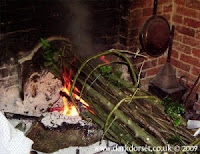
The custom persisted up until the last quarter of the 19th century. Its disappearance coincides with that of great hearths, w

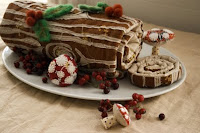
hich were gradually replaced by cast-iron stoves. The great log was thus replaced by a smaller one, often embellished with candles and greenery, placed in the centre of the table as a Christmas decoration. Today, the Yule log has become a traditional pastry, a delicious cake roll, smothered in coffee or chocolat

e-flavoured icing and decorated with sugared holly leaves and roses.

One old belief I find particularly nice is that in the midnight of the Christmas Eve cattle would kneel in their stalls to honour the occasion in the fashion of traditional images of nativity scenes.

Boxing day: Dec 26th there are various theories as to the reason for this name. Apparently, it is due to the fact that servants used to be given their Christmas presents in the boxes their masters had used the day before for their own.
After the presents, the carols, the cards, the turkey and the Queen’s speech on Christmas Day, the year draws to

a close on December 31st, or New Year’s Eve or, as it is commonly known in Scotland, Northumberland, Cumberland, Yorkshire

and Westmoreland, Hogmanay. However it is called, everywhere family and friends gather at home or at parties to see the old year off. In the end is the beginning, in the old is the new and the New Year is about to begin, for the better, hopefully for the better.

MERRY CHRISTMAS AND HAPPY 2011!

DICIEMBRE

Llamado así por los romanos antes de que añadiesen los meses de enero y febrero, el décimo, mantuvo su nombre a pesar de qu

e podían haberle llamado algo así como “Duodiciembre” para seguir con la práctica de los anteriores.

Cientos y cientos de costumbres antíguas se celebran justo antes, durante o después de la Navidad. Por ejemplo, la Quema del Ashen Faggot se originó en Dorset y Somerset, al sur de Inglaterra, y es de las que aún se respetan. El Faggot es un haz de ramas atadas entre si que se queman en el hogar en estas fechas. La verdad es que es una excusa perfecta para juntarse a beber en Nochebuena. Algo parecido ocurría con el Yule log, un pequeño tronco que se apartaba del fuego para ser quemado en la celebración navideña del año siguiente, como un símbolo de continuidad en el año venidero.

La costumbre persistió hasta finales del siglo 19 y su desuso coincidió con el de las

grandes chimeneas caseras, reemplazadas por estufas metálicas. En los EE.UU., en un arranque de melancolía, una cadena de televisión emite durante la Nochebuena y el día de Navidad un video de una chimenea ardiendo. En otras partes, ante la ausencia de la chimenea, se convirtió en un objeto de decoración sobre el que poner velas como centro de mesa. Hoy día el Yule se ha convertido en un dulce tradicional, parecido a nuestros brazos de gitano, con sabor a café, chocolate y decoración de flores y hojas de azúcar.

Una creencia muy antígua, particularmente bonita, es que en la medianoche de la Nochebuena el ganado se arrodilla en sus establos al estilo de las imágenes tradicionales de las escenas navideñas.

El día 26 se celebra el Día de las Cajas. Existen varias teorías en cuanto al origen de este nombre. Al parecer se debe al hecho de que la servidumbre solía recibir sus regalos de Navidad en las cajas que sus señores habían utilizado el dia anterior para los suyos.

Tras los regalos, los villancicos, las felicitaciones, el pavo asado y el discurso real, el año acaba el 31 con la Nochevieja, llamada Hogmanay en Escocia, Northumberland, Cumberland, Yorkshire y Westmoreland. Se llame como se llame, en todas partes las familias y los amigos se reúnen a ver marchar el año viejo . El final es el principio, lo viejo es lo nuevo y el año va a comenzar para mejor, esperemos que para mejor.

¡FELIZ NAVIDAD Y PRÓSPERO AÑO 2011!