Chumkee: Esta app parece ser realmente una especie de red social para estudiantes de idiomas. Se puede conversar con todas las partes del mundo ya que te ofrecen un traductor simultáneo. Y yo me pregunto: “¿Y eso cómo ayuda al aprendizaje de una lengua?”
viernes, 20 de abril de 2012
When there is a will, there is an app!
Chumkee: Esta app parece ser realmente una especie de red social para estudiantes de idiomas. Se puede conversar con todas las partes del mundo ya que te ofrecen un traductor simultáneo. Y yo me pregunto: “¿Y eso cómo ayuda al aprendizaje de una lengua?”
domingo, 8 de abril de 2012
What the Dickens!*

In 2012 it will be celebrated the 200th brithday of Charles Dickens, after Shakespeare, the greatest writer in English of all times. He was born in Porstmouth, England, the 7 of February of 1812 and died the 8 of June of 1870 in his country house in Higham, Kent, England.


martes, 20 de marzo de 2012
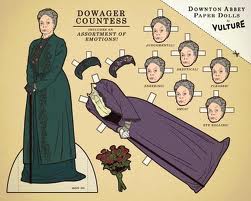
Downton Abbey

Lo confieso, ando colgado con esta serie. Me gusta todo: los personajes tan bien perfilados, esos escenarios reales tan bien elegidos, la fotografía con esa luz que ninguna serie española consigue ni siquiera imitar. Pero, sobre todo, me encanta el lenguaje que se usa. Esa variedad de acentos, de ese pomposo inglés de la clase alta hasta el acento del norte de los sirvientes.I must confess I am totally hooked on this series. I like it all: the superbly defined characters, the really well-chosen scenary, the light, a light that no Spanish series even dreams of imitating. But above all I love the language used, the variety of accents, the pompous air of the upper class characters as well as the servants' Yorkshire English

Aparte de tratar con bastante rigor histórico el marco general de la serie, la primera guerra mundial, esta serie muestra las distinciones de clase de la epoca, si bien con cierto regustillo a culebrón. No obstante, se puede aprender mucho de la lengua y de la cultura británica.
Not only does this series deal, quite rigorously, with the background of WWI, but also with the social distinctions of the time, although with a certain soap-operish charm. However, there's a lot to be leant about British language and culture.

Aquí os dejo unos cuantos vínculos interesantes tanto para los que ya la veis como para los que quereis empezar a verla.
Here you have some links both for those of you already enjoying it and for those willing to start.
How much do you remember from the first episode of Downton Abbey's second series?
(Un juego de memoria acerca del primer episodio)
Downton Abbey: 8 Ways to Make It Awesome Again for Season Three
(Una serie de consejos para mejorar la tercera temporada)

Downton Abbey: which character are you?
(Un juego muy divertido que te dice quién serías tú en la serie)
(Un blog muy interesante en el que trata de los diferentes acentos de la serie)
Highclere Castle is the home of the Earl and Countess of Carnarvon and also features as Downton Abbey (El castillo original donde se rodó la serie)Downton Abbey and ‘the cult of the English country house’
(Un artículo sobre otras series británicas que transcurren en mansiones en la campiña inglesa)
Why I Feel Guilty Watching Downton Abbey, or That Creamy English Charm
(Un blog muy gracioso con un punto de vista diferente acerca de la serie)jueves, 16 de febrero de 2012
Lost in Translation?


lunes, 23 de enero de 2012
¿Nivel de inglés? -¡Intermedio!

¿Que cuál es mi nivel de inglés? Pues...¡Intermedio!
Esta imaginaria reflexión seguro que ha pasado por la cabeza de mas de uno... y seguro que, tras ella, mas de uno también se ha preguntado cómo podría establecer con cierta seguridad cuál es realmente su nivel de inglés.
My level of English? Well, intermediate!
This imaginary thought is sure to have come to your mind more than once, and it is also likely to have been followed by the query: How could I state my authentic level in English?

Una vez mas, la respuesta no está en el viento sino en la red. Once more, the answer is not in the wind, but in the net.
Unas cuantas páginas nos pueden ayudar, de forma sencilla, a establecer con cierta seguridad nuestro nivel. A few webs can easily help you state your level of English quite efficiently.
http:
//www.englishtag.com/test/level_test_elementary_A1.asp (con niveles y subniveles)http://www.englishjet.com/english_courses_files/test_level.asp (con algunas referencias al FCE)
http://www.examenglish.com/leveltest/index.php( para mi gusto, el mas cómodo)
http://www.curso-ingles.com/ejercicios-test-ingles/test.php (muy muy completo)
http://www.cambridgeesol.org/test-your-english/index.php (este es del oficial de Cambridge)

http://www.uefap.com/test/index.htm (muy claro e informativo)
http://www.learn4good.com/languages/english_level.htm(fácil de usar)
lunes, 9 de enero de 2012
Go to London!

Here's a short list of links to webpages with exercises of English about London. I thought that, after the new year, the new year´s resolutions, the holidays, the trips to London and so on, some of you might welcome this opportunity to brush up your English.
Aquí teneis una pequeña lista de páginas web con ejercicios acerca de Londres. Se me ocurrió que, tras el año nuevo, sus resoluciones, las vacaciones, los viajes a Londres, etc, a algunos de vosotros os vendría bien esta oportunidad de poner vuestro inglés a punto.The first is for those of you who know the place. La primera es para los que conoceis la ciudad:
http://www.englisch-hilfen.de/en/exercises/countries/sights_london.htm

The second is a short text, very easy, on the Tower of London. El segundo, muy sencillo, es sobre la Torre de Londres: http://www.tolearnenglish.com/exercises/exercise-english-2/exercise-english-7057.php
Next is a series of printables, powerpoints and on line exercises. El siguiente es una serie de presentaciones, ejercicios on-line y páginas fotocopiables con ejercicios: http://www.eslprintables.com/buscador/buscar.asp?nivel=any&age=0&tipo=any&contents=london
This is highly recommendable for those preparing a trip to London. Este, para los que esteis preparando un viajecillo a Londres: http://blocs.xtec.cat/londontourist/category/exercises/
And this, for the return. Y éste, para la vuelta:
http://www.englisch-hilfen.de/en/exercises/countries
/london.htmI hope you like it and make the most of it if your new year´s resolution was about learning English!
Espero que os guste y lo aprovecheis si habeis decidido aprender inglés desde el Año Nuevo!
miércoles, 30 de noviembre de 2011
English Food (I'm hungry today!!)
VERY BRITISH MEALS
The first meal of the day in the morning is breakfast (usually eaten between about 7:30 and 9:00). Many British people eat toast with butter or margarine and jam (often strawberry, raspberry, apricot or blackcurrant jam), marmalade (a type of jam made from oranges) or Marmite (a dark brown spread made from yeast). Melon, grapefruit or fruit cocktail are popular. Others eat a bowl of cereal; for example, cornflakes or muesli with milk, or porridge (a mixture of oats, hot milk and sugar).
A traditional English breakfast (also known as a cooked breakfast or a fry-up) is a cooked meal which may contain food such as sausages, bacon, kippers (herring - a type of fish - which has been covered in salt and smoked), black pudding, scrambled or fried or poached egg, mushrooms, fried
tomatoes, baked beans, hash browns and toast. People sometimes eat a boiled egg, dipping (dunking) strips of toast (soldiers) into the egg yolk. A continental breakfast is a small meal and is not cooked; for example, a bread roll or croissant with cheese or ham and a cup of coffee. The most common drinks at this time of day are orange juice or a cup of breakfast tea.
Many people have a tea-break at about 11:00 in the morning (elevenses). If a meal is eaten in the late morning instead of both breakfast and lunch, it is called brunch.
Lunch (sometimes called more formally luncheon) is the meal eaten in the middle of the day (usually between about 12:30 and 2:00). Many people eat a sandwich (also known as a butty or sarnie in some parts of the UK). Some people have a simple meal such as cheese and biscuits or soup and bread. A ploughman's lunch is a traditional lunch for farmers: a bread roll, Cheddar cheese, Branston pickle and salad, perhaps
with a pork pie. It is also traditional for people to go to a pub with some friends for a pub lunch and a drink.
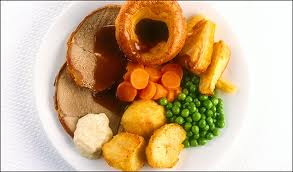
A Sunday roast is a traditional meal eaten by a family at Sunday lunchtime; for example, roast beef with roast potatoes, parsnips, peas, Brussels sprouts, green beans, Yorkshire pudding, bread sauce and gravy. Mint sauce or redcurrant jelly is often eaten with lamb, apple sauce with pork, and horseradish sauce (a type of mustard) with beef, cranberry sauce with turkey. Stuffing may be eaten with chicken or turkey.
Tea-time is a small meal eaten in the late afternoon (usually between about 3:30 and 5:00). People may drink tea, and often eat biscuits (American English: cookies), cakes or savoury foods such as sandwiches, crumpets or tea-cakes. Occasionally people may have a full
afternoon tea or a cream tea: this includes a scone with jam and cream (usually either whipped cream or thick clotted cream) as well as a selection of sandwiches and cakes.
High tea is a light meal eaten in the early evening (for example, 6 o'clock) served with a pot of tea; this is popular in north England and Scotland. Supper is the most common name for the meal eaten in the evening (usually between 7:00 and 8:30). Dinner is another common name for supper, but sometimes it is also used to refer to lunch, especially when this is the main meal of the day.
A dinner party is a formal evening meal to which guests have been invited. A common type of cooked meal in Britain is meat and two veg. This is a meat dish served together on the same plate with two types of vegetable, one of which is often a type of potato. It is common to eat a dessert (also known as a pudding, or informally as afters) after the main dish.
COMIDAS MUY BRITISH
La primera comida del día, por la mañana, es el desayuno (por lo general se toma entre las 7:30 y 9:00). Muchos británicos toman tostadas con mantequilla o margarina y mermelada (a menudo fresa, frambuesa, albaricoque o de grosellas negras), mermelada amarga (de naranjas) o Marmite (una oscura plasta marrón hecha de levadura). El cóctel de melón, na
ranja o frutas es muy popular. Otros toman un plato de cereal, por ejemplo, cereales o muesli con leche o gachas (una mezcla de avena, leche caliente y azúcar). Un desayuno tradicional Inglés (también conocido como un desayuno caliente) es una comida cocinada que puede incluir alimentos tales como salchichas, tocino, arenques ahumados, pudín negro, huevos fritos, revueltos o escalfados, champiñones, tomates fritos, habichuelas, patatas y pan tostado. A veces la gente toma un huevo cocido, y tiras de pan tostado para en la yema de huevo. Un desayuno continental es una comida pequeña y no caliente, por ejemplo, un bollo de pan o croissant con queso o jamón y una taza de café. Las bebidas más comunes en esta hora del día son el zumo de naranja o una taza de té de desayuno.
Muchas personas tienen un té-break a las 11:00 de la mañana. Si una comida se toma al final de la mañana en vez de desayuno y el almuerzo, se llama brunch.
La hora del té es una pequeña comida para la tarde (por lo general entre las 3:30 y 5:00). La gente puede beber té y comer galletas, alimentos salados o dulces, como bocadillos, bollos o pasteles de té-. En ocasiones la gente disfruta una tarde de té completo: esto incluye un panecillo con mermelada y crema (por lo general ya sea de crema batida o crema de leche espesa), así como una selección de sándwiches y pasteles.
La merienda es una comida ligera comida en la tarde (por ejemplo, a las 6) se sirve con una taz
a de té, lo que es popular en el norte de Inglaterra y Escocia. Cena es el nombre más común para la comida de la noche (generalmente 7:00-08:30) pero a veces también se utiliza para referirse a la comida, sobre todo cuando es la comida principal del día. Un tipo común de comida cocinada en Gran Bretaña es de carne y verduras. Este es un plato de carne servido en el mismo plato con dos tipos de verdura, una de las cuales es a menudo un tipo de patata. Es común comer un postre (también conocido como un flan, o informalmente como afters) después del plato principal.